A UN Planetary Council could help tackle the global climate and nature crisis
A UN Planetary Council could help drive more effective global action on climate change and other environmental crises. The current system is operating in silos. We need more urgent and coordinated action. The focus should be on putting existing decisions into practice and tracking progress. This is essential if we are to protect our shared planet from irreparable harm.
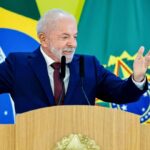
President Lula of Brazil first called for a UN Climate Council in 2024. We applaud his ambition, particularly given the complex and polarised geopolitical environment in which multilateralism currently operates. A UN Planetary Council would encompass not only the climate crisis, but also the full range of global environmental crises, from the loss of nature and wildlife to land degradation, desertification, and pollution. These crises are deeply interconnected and must be addressed together.
The fragmentation of the current multilateral system holds us back. The three Rio Conventions – on climate, biodiversity and desertification – each have their own processes, often operating in isolation from one another. The response to the climate and nature emergency spreads across multiple arenas – from development banks and treaty regimes to global finance and private sector decision-making.
Existing coordinating mechanisms, such as the UN Economic and Social Council, have significant roles to play. But they have not proved capable of driving the wider progress needed.
A Planetary Council could fill that gap, seeking to coordinate all actors around urgent environmental priorities. It would work to align efforts across existing conventions to ensure that they reinforce, rather than compete with, one another. This would maximise our collective impact in safeguarding the planet.
A UN Planetary Council would also put the climate and nature emergency at the heart of the UN system, giving it the political weight and visibility it needs. Such a Council could be established through a UN General Assembly resolution, in the same way that the UN Human Rights Council was created as a subsidiary body in 2006. Similar to the Human Rights Council, it could be supported by tools and procedures to hold governments to account on their pledges, such as the appointment of independent scientific experts.
It would not undermine the three Rio COPs, which will remain irreplaceable for global rule-making and galvanising action. It could support them through a more decisive structure – one designed to turn ambition into implementation at the fast pace our planet requires. With the Paris Agreement and the global biodiversity framework largely in place, there is little left to negotiate. The challenge now is to achieve rapid and coordinated delivery of the actions needed, informed by science and progress.
As the search for the next UN Secretary-General enters its next phase, we call on candidates to commit to improving global governance to confront the planetary emergency, including by considering the creation of a UN Planetary Council.
The science is clear. We have pushed the planet dangerously close to tipping points from which there is no return. The responsibility to change course lies with today’s leaders – tomorrow’s may not have the choice. The path to delivering this change is complex, but a UN Planetary Council could help us find it safely together.
19/06/2026
Juan Manuel Santos, former President of Colombia, Nobel Peace Laureate and Chair of The Elders
Graça Machel, Founder of the Graça Machel Trust, Co-founder and Deputy Chair of The Elders
Gro Harlem Brundtland, former Prime Minister of Norway and former Director-General of the WHO
Helen Clark, former Prime Minister of New Zealand and former head of the UN Development Programme
Elbegdorj Tsakhia, former President and Prime Minister of Mongolia
Zeid Ra’ad Al Hussein, former UN High Commissioner for Human Rights
Hina Jilani, Advocate of the Supreme Court of Pakistan and co-chair of the Taskforce on Justice
Ellen Johnson Sirleaf, former President of Liberia and Nobel Peace Laureate
Denis Mukwege, physician and human rights advocate, Nobel Peace Laureate
Mary Robinson, former President of Ireland and former UN High Commissioner for Human Rights
Ernesto Zedillo, former President of Mexico
About The Elders
The Elders are independent global leaders working for peace, justice, human rights and a sustainable planet. The group was founded by Nelson Mandela in 2007.
The Elders are Gro Harlem Brundtland, Helen Clark, Elbegdorj Tsakhia, Zeid Ra’ad Al Hussein, Hina Jilani, Ellen Johnson Sirleaf, Graça Machel (Deputy Chair), Denis Mukwege, Mary Robinson, Juan Manuel Santos (Chair) and Ernesto Zedillo.
Ban Ki-moon, Lakhdar Brahimi, Fernando Henrique Cardoso, Ricardo Lagos and Muhammad Yunus are Elders Emeritus.
Desmond Tutu (1931-2021) and Kofi Annan (1938-2018) were founding members of The Elders and served as Chairs from 2007 to 2013 and 2013 to 2018 respectively. Ela Bhatt (1933-2022) and Martti Ahtisaari (1937-2023) were members of The Elders from 2007 to 2016 and 2009 to 2018 respectively. Jimmy Carter (1924-2024) was also a founding member of The Elders.